KEPE publishes: «The evolution of social welfare in Greece – Poverty and social exclusion – Child protection as a main pillar of the welfare system»

KEPE publishes: «The evolution of social welfare in Greece – Poverty and social exclusion – Child protection as a main pillar of the welfare system»

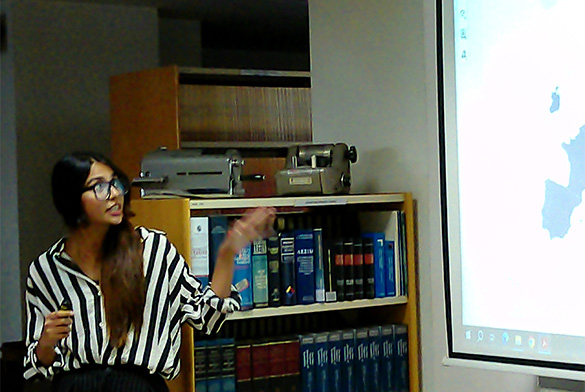
With the participation of over 270 students from 23 Universities across Greece and Cyprus, KEPE successfully concluded its two-day online conference (February 27-28, 2026), designed to introduce university students to, and engage them in, economic research.

ΚΕPE issues its 164th Discussion Paper entitled «Income shocks, working hours, and mental health during COVID-19» by A. Raftopoulou and N. Giannakopoulos

KEPE publishes the Composite Leading Indicator – February 2026 estimations.

ΚΕPE issues its 163rd Discussion Paper entitled «The effects of austerity on fiscal prudence: the role of private indebtedness and private investment» by Ch. Chrysanthakopoulos.
ISBN: 978-960-341-160-4 e-ISBN: 978-960-341-159-8
NO. 164. INCOME SHOCKS, WORKING HOURS, AND MENTAL HEALTH DURING COVID-19
Athina Raftopoulou, Nicholas Giannakopoulos 2026.
Ch. Chrysanthakopoulos 2026.
THE STATE OF THE GREEK ECONOMY AT THE END OF 2025
ISBN: 978-960-341-158-1 e-ISBN: 978-960-341-157-4
NO. 88. SECTORAL AND REGIONAL MULTIPLIER VALUES OF THE GREEK ECONOMY
N. Rodousakis, T. Tsekeris | ISBN: 978-960-341-155-0 (Print) ISBN: 978-960-341-156-7 (Online)
FULL ISSUE Executive Summary 1. Recent (macro-)economic developments 1.1. The main demand components in the first six months of 2025, Yannis Panagopoulos, Konstantinos Loizos, p. 6-15 1.2. Developments in inflation in Greece and the Eurozone, Emilia G. Marsellou, p. 16-20 1.3. Factor model forecasts
KEPE produces short-term forecasts concerning the evolution of the rate of change of real GDP in Greece.
The forecasts are conducted using KEPE’s dynamic structural factor model, and are published three times a year in the Greek Economic Outlook Journal.
KEPE was first founded in 1959, initially as a small research unit under the name Centre of Economic Research. The decision for its establishment was taken by Prime Minister at the time, Konstantinos G. Karamanlis, following the recommendation of the Governor of the Bank of Greece at the time, Xenophon E. Zolotas.
The Centre was organized by its first Scientific Director and Chairman, Professor Andreas G. Papandreou, who was at the time chair of the economics department of the University of California, Berkeley, and was later to become Greece’s Prime Minister. The Centre’s mission focused on the scientific study of Greece’s economic issues and the encouragement of economic research.
In 1964, the Centre took its present name, Centre of Planning and Economic Research (KEPE) and expanded its scope of work beyond economic research and the training new economists, to include the preparation of economic development programs, the monitoring and analysis of short-term and medium-term economic developments and the formulation of economic policy recommendations.